A great Furniture Table Dining setup can make a home feel warmer, more useful, and more pulled together almost overnight. A bad one does the opposite. It crowds the room, forces awkward chair angles, collects scratches faster than expected, and somehow never feels comfortable enough for long meals or everyday use. That gap is why buying a dining table is not just about whether you like the finish or the shape. It is about how the table works with your room, your chairs, your household habits, and the kind of life that actually happens around it.
I have seen people buy beautiful dining tables that looked perfect online and became a daily irritation the second they were placed in the room. The table was too wide to walk around comfortably. The pedestal base banged into knees. The chairs technically matched but felt stiff after twenty minutes. On the other hand, I have also seen modest dining rooms feel far more expensive and inviting because the proportions were right, the seating was comfortable, and the table fit the rhythm of the household. That is the real goal. Not a magazine moment. A room that works on Tuesday night, during holiday dinners, and on the random afternoon when someone spreads out a laptop and turns the dining area into a temporary office.
Why furniture table dining choices affect the whole room
The dining table is usually one of the largest and most visually dominant pieces of furniture in a home. It does not sit quietly in the background. It controls circulation, seating, lighting placement, and often the entire mood of the space.
That matters because dining rooms are rarely used for only one thing anymore. The same table may handle:
Weeknight dinners.
Homework.
Remote work.
Craft projects.
Birthday cake.
Serving during gatherings.
Puzzle nights.
Coffee with a friend.
A smart dining setup supports all of that without feeling like a compromise. If the table is too delicate, too oversized, too trendy, or too uncomfortable, it becomes one of those purchases people defend for a year and quietly replace later.
How to choose furniture table dining pieces by daily use
Start with function before style. That one decision clears up half the confusion.
Ask yourself these questions:
How many people eat here most days?
Do you host often or only occasionally?
Is this a formal dining room, an open-plan dining area, or a kitchen-adjacent table?
Will children use it?
Will this table double as a work surface?
Do you want a soft, cozy feel or something cleaner and more architectural?
Those answers shape the right kind of table more than trend reports do.
Buy for the ordinary day first
The most common dining-room mistake is shopping for the two biggest gatherings of the year instead of the hundred ordinary meals in between. If two to four people use the table most of the time, a massive eight-seat table may feel impressive but become annoying fast.
A better question is this: what does the room need to do most often without friction?
If the answer is quick breakfasts and family dinners, prioritize comfort and easy movement. If the answer is entertaining, then capacity and serving space matter more. If the answer is mixed use, the table has to be sturdy and adaptable.
The best dining table is rarely the biggest one
People often associate a large table with generosity and luxury. Sometimes that is true. Just as often, it makes the room feel overfilled and awkward.
A well-sized table gives you:
Enough elbow room to eat comfortably.
Space to pull chairs out without hitting walls.
Clear walkways.
Better visual balance.
More flexibility for styling and lighting.
A too-large table gives you constant low-level frustration. You feel it every time someone squeezes behind a chair or the room feels blocked.
Best table shapes for different dining spaces
Shape changes everything. It affects how many people fit, how easy conversation feels, and how the room flows around the furniture.
Rectangular dining tables
This is the most common shape for a reason. It works well in long rooms, seats more people efficiently, and fits many layouts.
Best for:
Standard dining rooms.
Open-plan spaces.
Larger households.
Homes that host often.
Pros:
Easy to scale up.
Great for six to ten seats.
Familiar and flexible.
Works well with benches and mixed seating.
Cons:
Can feel too formal in small rooms.
Corners take more visual space.
Oversized rectangles can dominate a room fast.
A rectangle is the safest choice if you need seating efficiency and room flexibility.
Round dining tables
Round tables often feel warmer and more social because everyone faces inward more naturally. They are especially good in square rooms and smaller dining areas.
Best for:
Breakfast nooks.
Smaller dining rooms.
Four-person households.
Homes that value conversation.
Pros:
Softer visual footprint.
No sharp corners.
Better traffic flow around the edges.
Feels intimate and balanced.
Cons:
Large round tables can be hard to reach across.
Not always the most space-efficient for bigger groups.
Some bases limit chair placement.
If the room feels boxy or tight, round tables often make it feel easier immediately.
Oval dining tables
Oval tables are underrated. They combine the length of a rectangle with the softer movement of a round table.
Best for:
Narrow rooms that need softness.
Homes wanting a slightly less formal look.
Families who need flexibility without hard corners.
Pros:
Easier traffic flow than a rectangle.
Elegant but less rigid.
Good for mixed traditional and modern interiors.
Cons:
Fewer exact chair-placement cues.
Can be tricky with certain chair styles.
Not as common, so selection is narrower.
This is one of my favorite shapes when someone wants something practical that still feels a little more graceful.
Square dining tables
Square tables can look beautiful, but they work best in specific conditions.
Best for:
Square rooms.
Smaller gatherings.
Four-seat layouts.
Design-focused dining spaces.
Pros:
Balanced and symmetrical.
Great for intimate meals.
Looks intentional in compact dining areas.
Cons:
Larger square tables become hard to converse across.
Not ideal for long rooms.
Less efficient for seating larger groups.
If your room is compact and square, this shape can look excellent. In long narrow spaces, it often feels wrong.
Furniture table dining sizes that actually work
Measurements matter more than people want them to. A table does not just need to fit the room. It needs to fit the room while people are sitting in it.
The practical clearance rule
Try to leave about 36 inches around the table when possible. That allows for chairs, movement, and basic comfort. Tighter rooms can sometimes work with 30 inches, but it starts feeling compressed.
This is the measurement buyers skip most often. They measure the tabletop and forget the people.
General seat planning
Use these as realistic guidelines:
2 people: small round or square table.
4 people: 36 to 48 inch round, or compact rectangle.
6 people: 60 to 72 inch rectangle, or larger round.
8 people: longer rectangle or extension table.
10 or more: only if the room genuinely supports it.
Also remember that armchairs take more space than armless dining chairs, and heavily upholstered seats reduce how many chairs actually fit.
The painter’s tape trick
Before buying, tape the table footprint onto the floor. Then add chair pull-back space. Walk around it. Open nearby doors. Pretend to carry plates past it.
This simple test catches mistakes faster than staring at dimensions online.
Best materials for furniture table dining setups
Material affects durability, maintenance, mood, and whether the table still looks good after actual living happens around it.
Solid wood dining tables
Wood remains the classic favorite because it feels warm, grounded, and forgiving in daily life.
Best for:
Family homes.
Traditional, farmhouse, transitional, and organic modern interiors.
People who want a table that ages with character.
Pros:
Warm and timeless.
Usually easier to live with visually.
Scratches can blend into patina over time.
Works with many chair styles.
Cons:
Some woods dent more easily.
Requires basic care.
Tone matters a lot with flooring and nearby furniture.
A wood table often looks better with age than people expect, especially if the finish is not overly glossy.
Veneer dining tables
Good veneer can be a smart middle ground. Bad veneer is what gives the category a bad reputation.
Best for:
Budget-conscious buyers.
Contemporary interiors.
People who want a wood look with more cost control.
Pros:
More affordable than solid wood.
Can look sleek and refined.
Usually more stable in certain designs.
Cons:
Lower-quality versions chip badly.
Harder to repair convincingly.
Not all veneers age gracefully.
If you go veneer, quality matters more than style details.
Glass dining tables
Glass can lighten a room visually, which is useful in smaller or darker spaces. It also creates a more open feel.
Best for:
Small dining areas.
Modern interiors.
Rooms where visual weight is a concern.
Pros:
Makes the room feel less crowded.
Easy to wipe.
Looks airy and elegant.
Cons:
Shows fingerprints constantly.
Can feel cold or less welcoming.
Some people dislike the sound and feel of dining on glass.
Glass works best when you truly want lightness. It is less appealing if you want a cozy, grounded dining room.
Stone or faux-stone dining tables
These look beautiful and expensive when done well. They also come with trade-offs people sometimes ignore.
Best for:
Modern and upscale interiors.
Buyers wanting a statement piece.
Homes where the dining area is a major design feature.
Pros:
Strong visual impact.
Sophisticated look.
Heat resistance is often helpful.
Cons:
Heavy.
Can feel hard and echo-prone.
Real stone may stain or etch depending on type.
Usually less forgiving with kids.
They are striking, but they work best for people who really want the visual statement.
Metal dining tables or metal bases
Metal usually appears in the base rather than the entire table, and that is often where it shines.
Best for:
Industrial, modern, or mixed-material interiors.
Buyers who want visual structure.
Pros:
Strong and stable.
Great paired with wood or stone tops.
Helps a dining set feel more current.
Cons:
Can feel harsh if overused.
Some finishes scratch.
Too much metal can make the room feel cold.
Dining chair choices matter as much as the table
People often spend weeks on the table and then rush the chairs. That is backwards. Chairs determine whether anyone actually wants to stay seated.
What makes a dining chair comfortable
Look for:
A supportive back angle.
Enough seat width.
A seat height that works with the table.
Stable construction.
A material you are willing to maintain.
Chairs should feel good during a full meal, not just a 30-second showroom sit.
Upholstered vs wood dining chairs
If you host long dinners or want a softer room, upholstery helps. If kids and daily mess are major factors, wood or easy-clean mixed-material chairs are usually smarter.
Related Post: Entryway Storage Cabinet Solutions: Organize Your Front Door
Should dining chairs match?
Not always. Matching sets are safe, but mixed seating often looks more interesting and lived-in.
Good combinations:
Matching side chairs with two different end chairs.
Wood chairs around a pedestal table.
A bench on one side with chairs on the others.
Fully matched chairs in a strong material with one contrasting texture in the room.
The key is consistency somewhere. Repeat a tone, finish, or silhouette so the mix feels deliberate.
Extension tables: smart buy or annoying compromise?
Extension tables can be brilliant. They can also be the furniture version of a solution that sounds better than it feels.
When extension tables work well
They are a smart buy if:
You host occasionally.
Your daily household size is smaller than your entertaining needs.
The room can accommodate the extended size.
The extension mechanism is smooth and realistic to use.
When they become frustrating
They are less ideal if:
You need maximum seating constantly.
The leaves are difficult to insert or store.
The seam bothers you visually.
The table feels unstable when expanded.
My view is simple: extension tables are excellent for people who genuinely use the feature. If you know you will never bother opening it, just buy the table size you actually need.
Best furniture table dining styles for different home looks
Style matters, but it should come after fit and function. Still, it helps to know what works visually.
Modern dining furniture
Usually includes:
Clean lines.
Mixed materials.
Sculptural bases.
Neutral tones.
Minimal ornament.
Best if you want a crisp, edited room. Just make sure the furniture still feels warm enough to invite use.
Farmhouse and rustic dining furniture
Often includes:
Wood grain.
Trestle bases.
Chunkier profiles.
Natural finishes.
Traditional silhouettes.
This style feels welcoming, but it can get visually heavy if every piece is oversized.
Transitional dining furniture
This is the safest zone for many homes.
Often includes:
Balanced shapes.
Comfortable proportions.
Soft modern updates to classic forms.
Easy material mixing.
If you want the dining room to stay relevant for years, transitional is a smart lane.
Scandinavian or soft minimalist dining furniture
Usually includes:
Light woods.
Simple lines.
Airy shapes.
Quiet elegance.
This look is especially good in smaller spaces because it keeps visual clutter low.
The most overlooked detail in furniture table dining
Here is the thing many buyers miss: leg placement matters as much as tabletop size.
A table can seem perfect on paper and feel awkward in use because the legs block chairs or knees. Trestle bases, pedestal designs, corner legs, and sculptural bases all affect comfort.
Why the base changes everything
A good base:
Allows chairs to tuck properly.
Leaves room for knees.
Makes seat placement intuitive.
Supports the table without visual heaviness.
A bad base:
Forces weird chair spacing.
Blocks end seating.
Creates knee collisions.
Makes the whole table less flexible than the dimensions suggest.
This is why I never judge a dining table by the top alone.
How to choose a dining table for open-plan spaces
Open-plan homes introduce a different challenge. The dining area has to work from several angles and connect visually with nearby zones.
What works best in open layouts
Look for:
A table that relates to nearby finishes without matching everything exactly.
A shape that supports circulation.
Chairs that do not create visual clutter.
Lighting that anchors the dining zone.
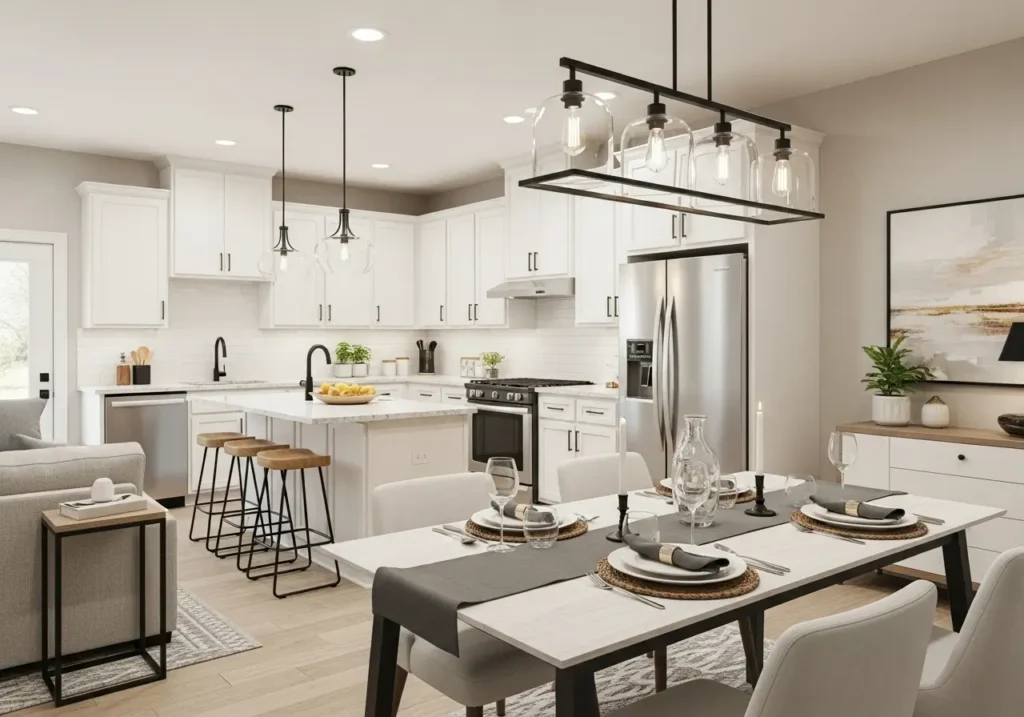
A dining area in an open plan should feel defined but not isolated. The furniture should belong to the house, not feel like a separate showroom inserted into it.
Best shapes for open spaces
Rectangles and ovals often work best because they create direction and align well with adjacent kitchen islands or living zones. Round tables can work too, especially when the open space needs visual softness.
Common furniture table dining mistakes
These mistakes show up constantly, and most are avoidable.
Mistake 1: Buying by room photo, not room scale
A table can look gorgeous online and still be completely wrong for your layout.
Mistake 2: Ignoring chair comfort
Dining chairs are not background props. They are where people actually sit.
Mistake 3: Choosing a trendy finish with no tolerance for life
High-maintenance surfaces look less appealing once every cup ring and scratch becomes emotional.
Mistake 4: Overfilling the dining room
The room needs breathing space. More furniture does not equal more luxury.
Mistake 5: Forgetting lighting
A table without the right overhead light often feels disconnected and underwhelming.
Mistake 6: Matching everything too literally
A dining set does not need to look like it arrived in one giant box from the same page of a catalog.
The smartest buying strategy for furniture table dining
If I were helping someone buy today, I would use this order:
Measure the room and clearances.
Decide how many people use the table most days.
Pick the shape that supports the room best.
Choose material based on lifestyle, not fantasy maintenance habits.
Test chair comfort seriously.
Check base design and leg placement.
Think about lighting and surrounding furniture before committing.
That order avoids a lot of expensive second-guessing.
What I would recommend for different real-life households
For a small apartment
Round or oval table.
Four comfortable chairs max.
Light wood or mixed-material design.
Chairs that tuck cleanly.
For a family with kids
Durable wood or quality veneer.
Easy-clean chairs.
Rectangle or oval for flexibility.
Finish that hides minor wear gracefully.
For frequent hosts
Rectangular table or good extension table.
Comfortable upholstered or mixed chairs.
A layout that supports serving and circulation.
For a style-focused home
Statement table with disciplined chair choice.
Strong lighting above.
Mixed materials for warmth and interest.
Enough practicality that the room still gets used.
The final verdict is simple. The best Furniture Table Dining setup is not the one that looks most dramatic in a staged room. It is the one that fits the space properly, feels good to sit at, survives the way your household actually lives, and still looks right when the table is covered with breakfast plates, homework, or takeout containers on a random weeknight. If you want the safest smart choice, buy slightly smaller than your fantasy, slightly sturdier than your impulse, and far more comfortable than the showroom makes seem necessary. That is the dining furniture people keep for years.